
How Physical AI Is Moving From Our Screens Into Our Homes
TECHNOLOGY • LIFESTYLE • HOME • AI
For years, the smart home promised convenience. In 2026, the more interesting question is whether artificial intelligence can move beyond responding to commands and begin doing meaningful work in the physical world.
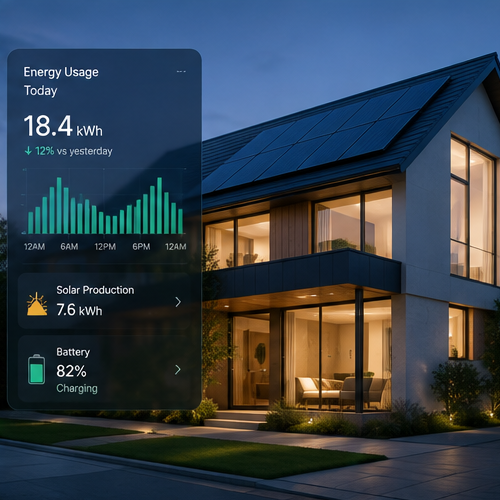
AI Is Leaving the Screen
The first wave of mainstream generative AI trained consumers to think of artificial intelligence as something that lives inside a chat window. You ask a question, generate an image, summarize a document, or plan a trip.cThe next phase is beginning to look much more physical. Instead of simply giving advice, AI is being connected to cameras, sensors, appliances, motors, and robots that can interact with the environment around us.
That shift is sometimes described as physical AI. Software intelligence is paired with machines capable of seeing, moving, manipulating objects, and coordinating other devices.
In the home, that could eventually mean technology that does not merely remind you to start the laundry, but can actually help manage the process itself.
LG’s “Zero Labor Home” Is a Glimpse of That Future
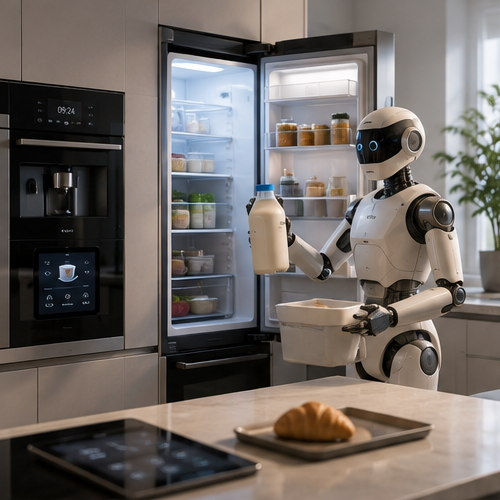
At CES 2026, LG presented CLOiD, an AI-enabled home robot developed around what the company calls its “Zero Labor Home” vision. According to LG, CLOiD is designed to coordinate with connected appliances and perform household tasks using artificial intelligence, computer vision, autonomous navigation, articulated arms, and hands designed for object manipulation.
LG’s demonstration scenarios make the concept easier to imagine in everyday life. The company described CLOiD retrieving milk from a refrigerator, placing a croissant into an oven, initiating laundry cycles, and folding and stacking garments. The bigger story is not simply whether consumers will buy a humanoid-looking robot. It is that appliance companies are beginning to imagine the home as an intelligent, connected environment where AI can coordinate both digital decisions and physical actions.
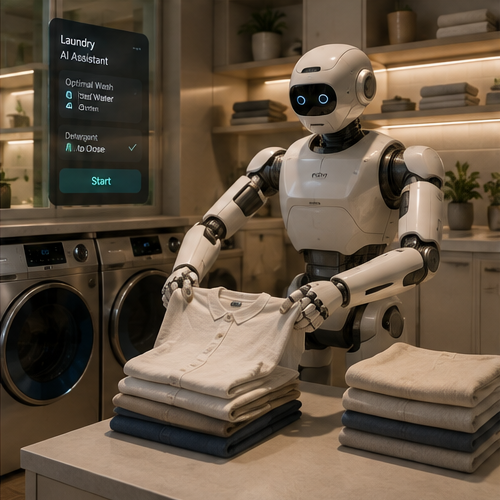
“The next smart home may not wait for you to press a button. It may learn when and how to help.”
The Smart Home Is Already Here — Just in Pieces
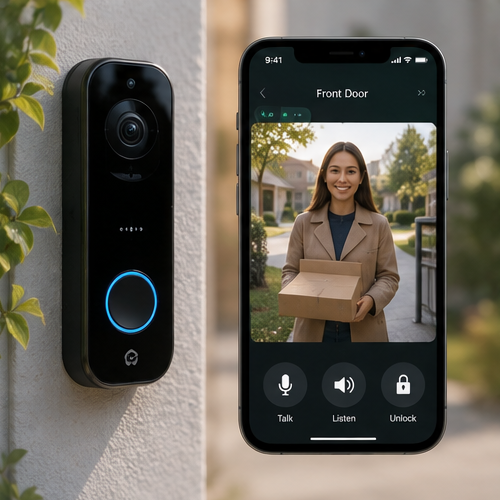
The futuristic robot gets attention, but the transition is already underway through smaller devices. Pew Research Center’s 2026 survey found that 35% of U.S. adults say they have an AI-enabled smart speaker, while 18% report an AI smart doorbell, 13% an AI robot vacuum, and 11% an AI smart thermostat. Those products are not yet one seamless household brain, but they show that AIenabled hardware has already entered everyday domestic routines.
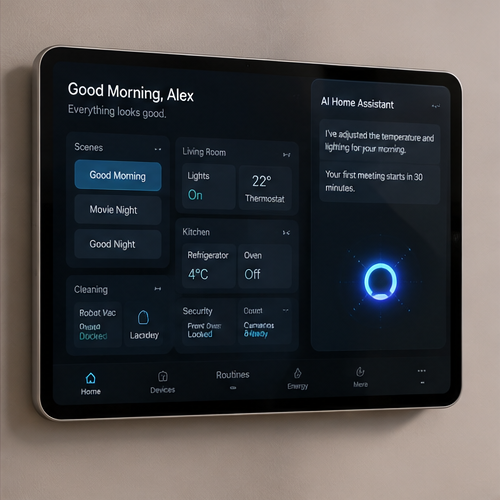
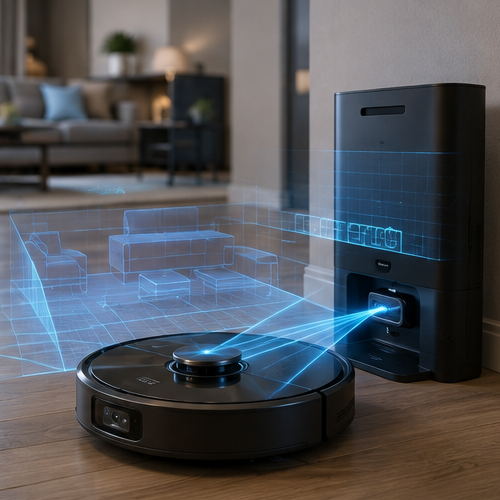
The next competitive advantage may therefore be coordination. A refrigerator can know what food is available. A wearable can know when someone wakes up. A thermostat can respond to occupancy. A robot vacuum can map the floor. An AI assistant can understand a calendar. When those systems begin sharing context, the home becomes less like a collection of gadgets and more like a responsive ecosystem.
What Could This Actually Change?
Time: Routine chores could require less active planning and supervision, giving people back small blocks of time throughout the day.
Accessibility: Physical AI could become particularly meaningful for older adults and people who need assistance with repetitive household tasks.
Energy: AI systems could coordinate heating, cooling, appliance cycles, and energy use based on real household behavior. Food: Connected kitchens could combine inventory awareness, meal planning, cooking guidance, and eventually robotic assistance.
Home Management: Instead of opening five separate apps, consumers may increasingly expect one intelligent layer to coordinate the entire home.
But a Home That Knows You Also Watches You
Convenience creates a more complicated trade-off when intelligence moves into private spaces. A genuinely useful AI home may need cameras, microphones, room maps, schedules, device histories, and information about personal routines. Pew’s 2026 research also found broad concern about AI’s effect on personal information, underscoring that adoption will depend on more than impressive demonstrations.
For consumers, the questions will become increasingly practical: Where is the data processed? Can recordings be stored? Which devices can communicate with one another? What happens if a connected service shuts down? And how much control can a person retain when automation becomes proactive rather than reactive?
Luxury First, Everyday Later?
The earliest versions of advanced home robotics are likely to feel aspirational. Cost, reliability, maintenance, safety, and the complexity of navigating real homes are major barriers. A carefully staged demonstration is very different from a robot dealing with pets, children, clutter, narrow apartments, fragile objects, and thousands of unpredictable household situations.
But consumer technology often follows a familiar pattern. Features that begin as expensive novelties become smaller, cheaper, and less visible. The bigger story may not be whether every household owns a human-shaped robot. It may be that pieces of robotic intelligence become embedded into appliances we already buy.
What’s Next?
Watch for the boundary between appliance, robot, and AI assistant to keep disappearing. The refrigerator will be less interesting because it has a screen and more interesting because it can understand inventory. The vacuum will matter less because it drives itself and more because it understands the room. The assistant will matter less because it can answer questions and more because it can coordinate what happens next.
For Tech What’s Next, that is the shift worth watching: AI is no longer only trying to become the software we use. It is trying to become part of the environment we live in.
Sources & Image Credit
Research: LG Electronics, “LG CLOiD Home Robot / Zero Labor Home,” CES 2026; Pew Research Center, “Americans and AI 2026: Chatbots, Smart Devices and Views on Impact,” June 17, 2026.
Editorial image included for visual direction: smart-kitchen reference image. Replace with licensed or approved press photography before public publication if required by IZON’s publishing workflow.